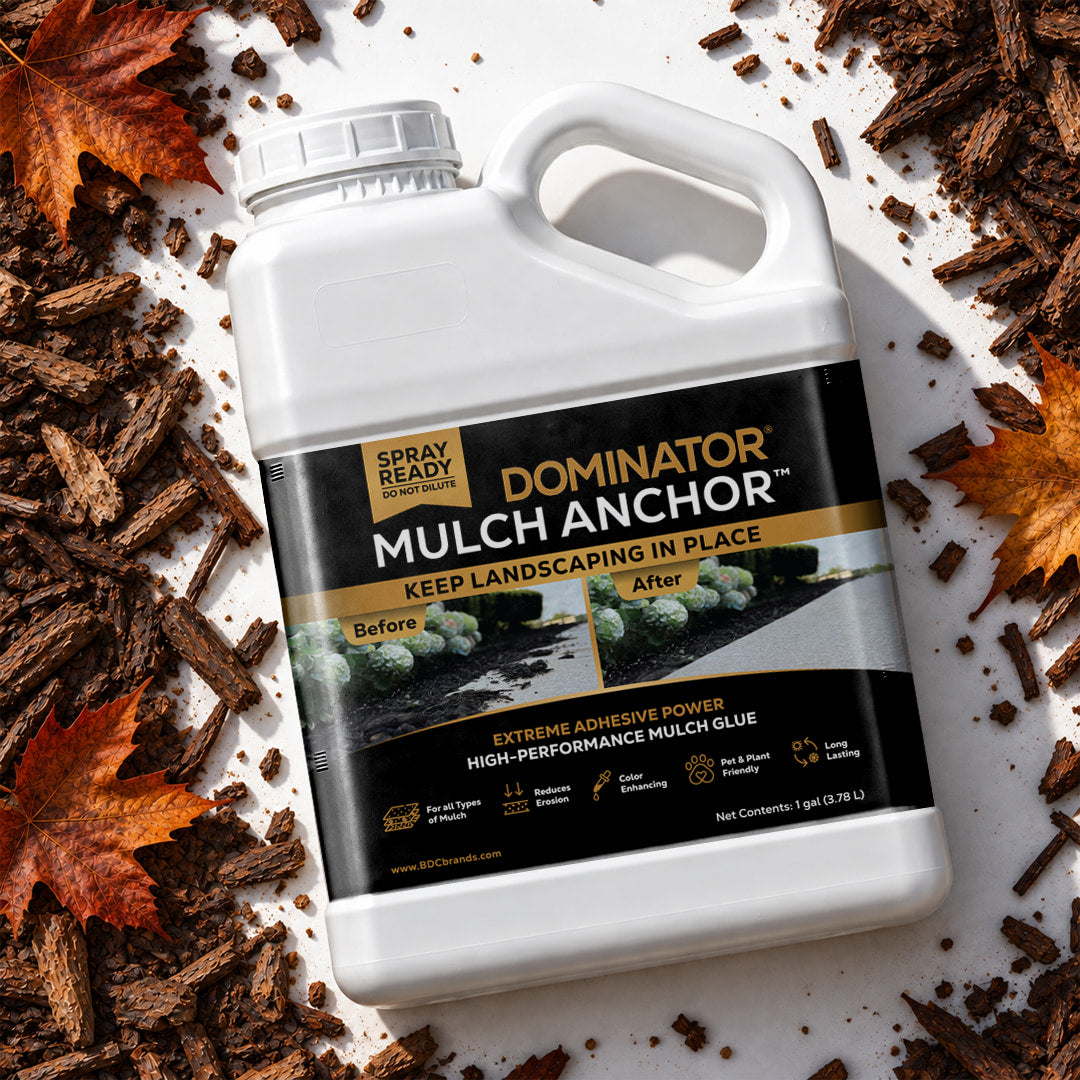



If you have a dog and mulch, you already know how this goes. The mulch stays put for a few days, then it doesn’t. Some of it ends up on the patio, some of it ends up in the yard, and every so often you catch your dog trotting around with a chunk of bark like it’s the best thing that’s happened to them all week!
We get asked this question a lot: Is there something we can put on the mulch that’s actually safe for the dog? The answer to that is yes. Once DOMINATOR® Mulch Anchor cures, it's non-toxic and safe for pet paws.
Why dogs go after mulch in the first place
Dogs eat mulch because they are curious or bored. Mulch smells interesting, it moves when they nose at it, and loose bark chips are roughly the size and texture of something worth chewing on. Some dogs grow out of this behavior. Some dogs treat fresh mulch like a special dog treat, every time they get the opportunity.
This isn’t just a mess problem. Loose mulch sends dogs to the emergency vet often enough that most vets will ask about it if your dog comes in with stomach trouble. It can cause vomiting, and in worst cases, a required surgery. So, “how do I stop my dog from eating mulch” is a fair question to take seriously. Anchoring the mulch bed so there’s not loose material is a practical answer to our dog’s desire to eat mulch, while still wanting to protect your flower beds with mulch.
What Mulch Anchor does
Mulch Anchor is a water-based binder, not a sealant and not a tarp. You spray it over dry mulch, pine straw, or pea gravel with a pump sprayer. It soaks in, then dries to a clear film that locks the pieces to each other and to the ground underneath. Water still gets through to the soil (i.e., water permeable), so your plants keep getting what they need from rain and irrigation systems. It holds for 12 to 24 months before you need to redo it, and it helps protect mulch from fading in the sun, which is a nice side benefit.
For the dog families specifically, the upside is fewer stray chips to find where they don’t belong. It doesn’t work by tasting bad or smelling unpleasant. It works because there is simply very little loose mulch left for your dog to pick up in the first place.

If your dog eats mulch
Eating mulch occasionally usually isn’t an emergency. Watch for vomiting that doesn't stop, a swollen or painful belly, lethargy, or a dog who suddenly stops eating. Those can point to a blockage, and that's a vet visit, not a wait-and-see situation. Old, wet mulch that is moldy is a separate concern worth knowing about too. Mold can cause tremors or other neurological symptoms if a dog eats a moldy chunk, so toss mulch that's turned slimy or fuzzy rather than working it back into the bed.
One mulch to rule out entirely in a dog yard is cocoa bean mulch. It's made from cocoa shells and contains theobromine, the same compound that makes chocolate dangerous for dogs. Dogs also tend to find the smell appealing, which makes it a worse combination than it already sounds. Pine straw, shredded cypress, rubber mulch, and pea gravel under half an inch are all better choices around pets, and Mulch Anchor works on every one of them.
Mulch Anchor or XL depends on where your dog walks
Standard Mulch Anchor is formulated for landscape beds that get looked at, not walked. Think foundation plantings and island beds in the front of your home.
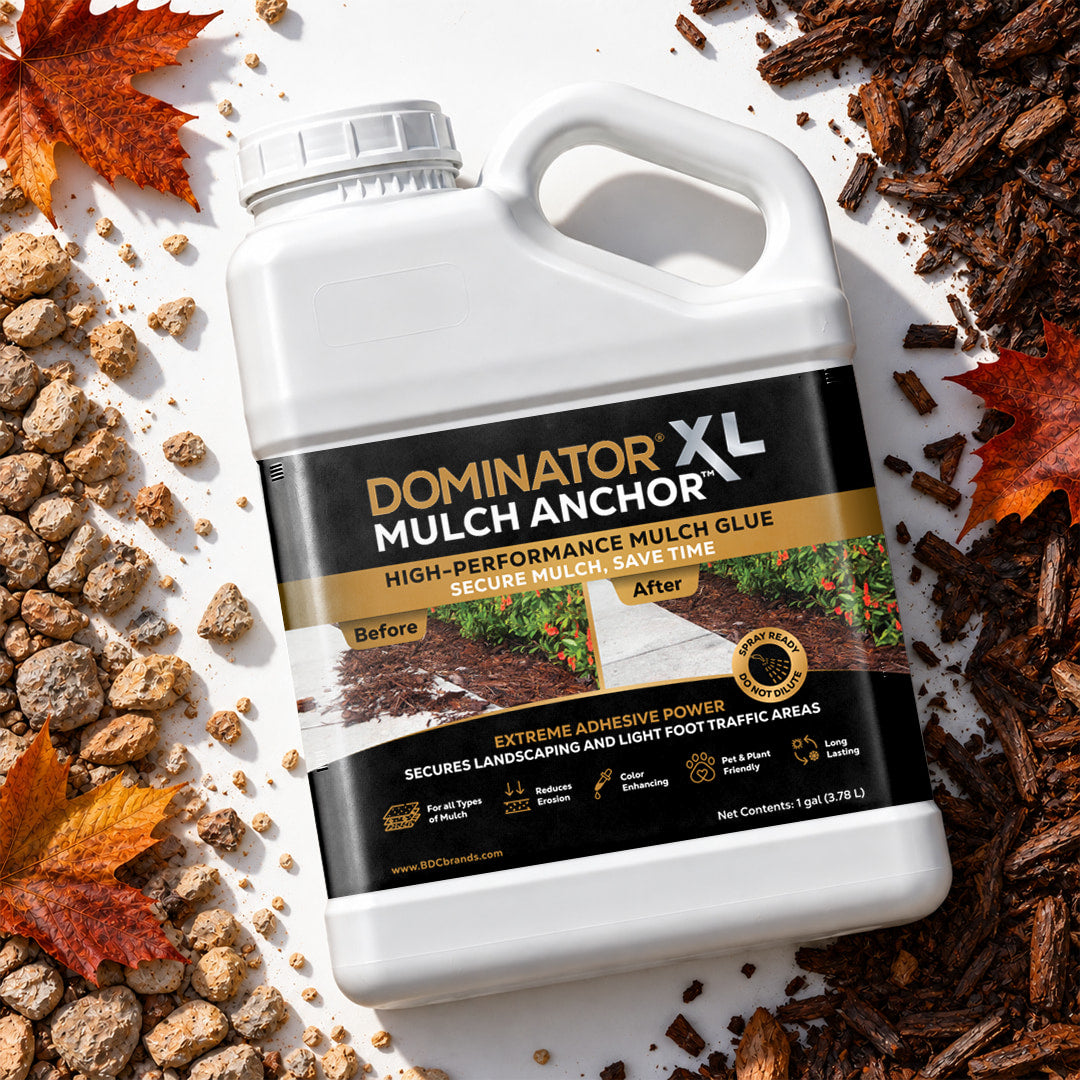
Mulch Anchor XL is the stronger formula and is rated for light foot traffic. If your dog has a patrol route along the fence line, if the bed sits between the back door and the gate, or if your mulch doubles as a path, that is traffic, and XL is the one to buy. Both come ready to spray, with no need for mixing or diluting either one.
When your dog can go back out
Mulch Anchor fully cures in 24 hours. Before that, keep them off in the way you’d keep them off anything freshly sprayed in the yard. Leave an hour between coats if you’re doing two, and give it the full day before you allow your dog to check out their new landscaped beds. Cool or damp weather stretches that out, so if the surface still feels tacky, give it a little longer. Dry means it’s done.
If your dog crosses Mulch Anchor before it’s cured, a mild soap and a good rinse will take care of their paws.
Getting a result that lasts
A few things matter more than people expect. The mulch needs to be dry. Freshly laid mulch needs at least 24 hours to dry before you treat it, and spraying damp mulch will reduce how much the Mulch Anchor sticks. Surface and air temperatures both need to stay above 50°F until it's dry, and don't apply if rain is forecast within 24 hours.
Use a pump or battery sprayer with a fan tip, keep the nozzle close to the mulch, and work in even, broad strokes. Misting from up high leaves gaps, and flooding it doesn’t work either as it just wastes product (and doesn’t work as effectively).
Coverage runs about 300 sq ft per gallon for pine straw, and about 150 sq ft per gallon for shredded mulch, pea gravel, or rubber mulch. Pine straw and mulch take two coats. Rubber mulch and large bark need three coats. If you’re not sure how the finished results will look, it’s a good idea to spray a 2 sq ft test patch first, then use the project calculator to size out the rest of the job.
All in all, anchoring changes how your mulch behaves.
That's less raking for you, and one less thing for them to eat.