


You know that moment right after a summer rain, when your patio suddenly looks incredible? The reds turn deeper, the charcoals turn richer, and the whole hardscape looks like it came straight out of a design magazine. Then the sun comes out, the pavers dry, and the magic fades back to chalky and tired.
A wet look paver sealer makes that moment permanent.
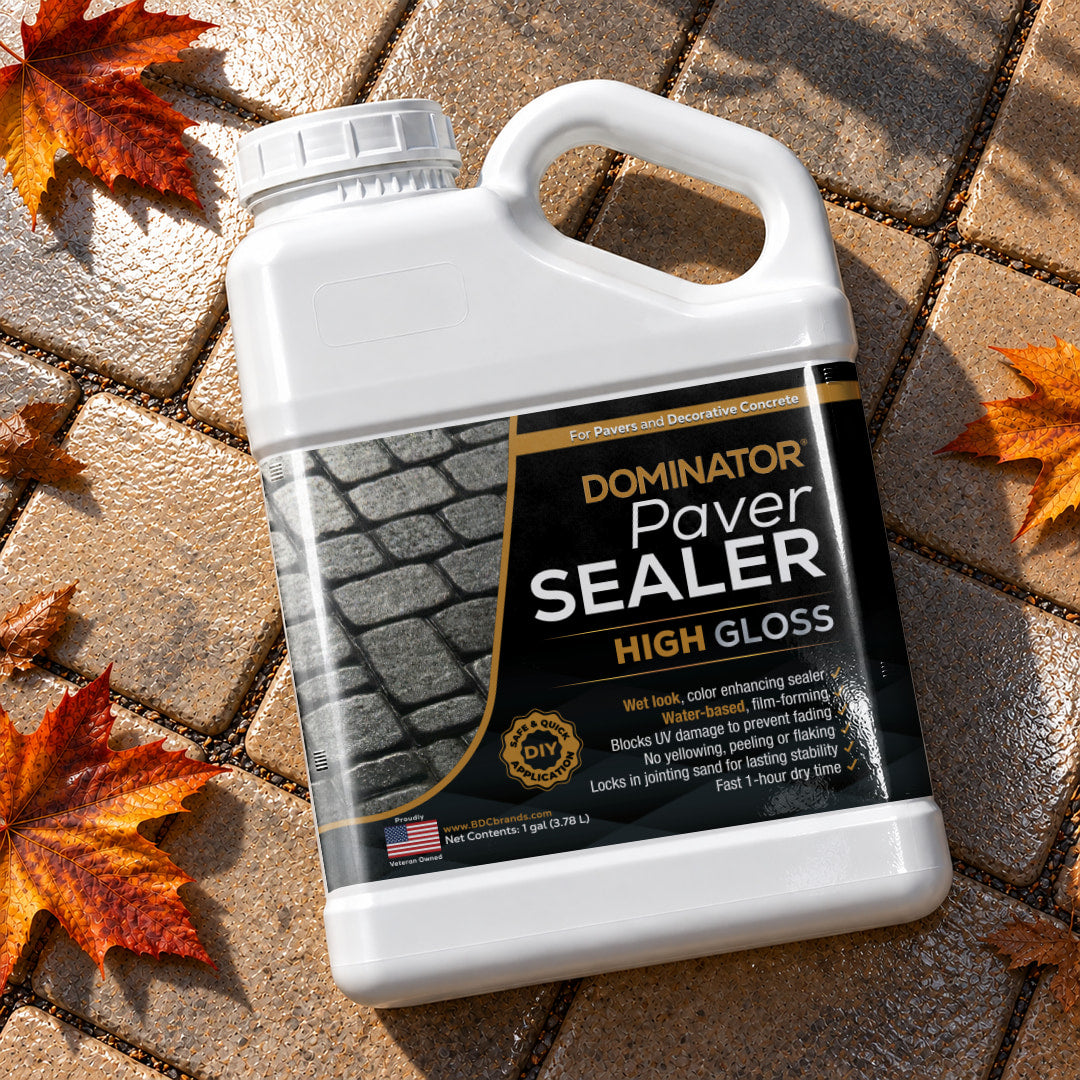
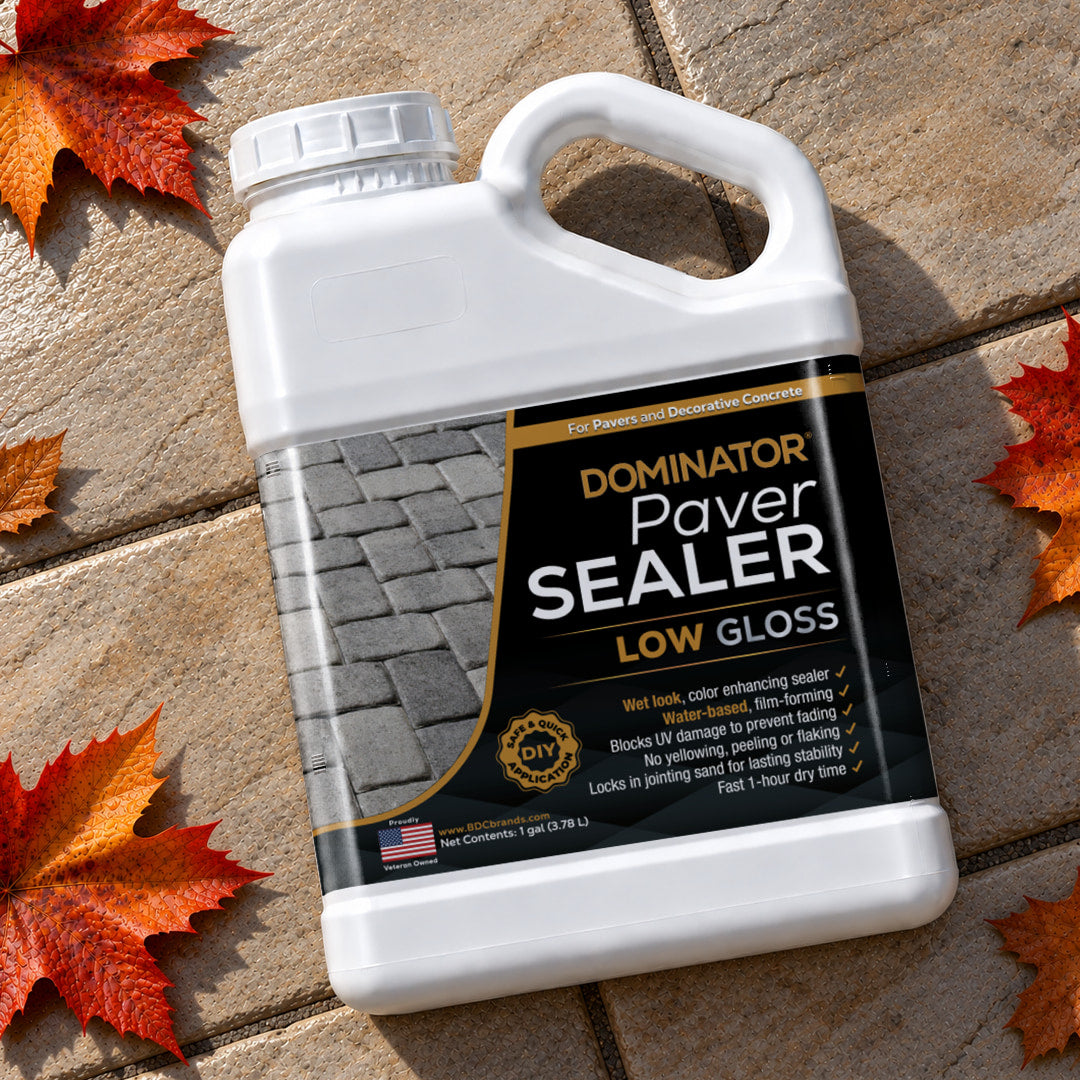
But here is what a lot of people don't realize: "wet look" doesn't have to mean mirror-shine. That's exactly why the 2026 DOMINATOR® Paver Sealer lineup comes in two finishes: DOMINATOR® Paver Sealer High Gloss for a bold, reflective showpiece finish, and DOMINATOR® Paver Sealer Low Gloss for rich color with a more subtle, understated sheen.
Both are polymer-modified, water-based acrylic sealers that enhance color, form a protective film, help stabilize joint sand, and defend your pavers against moisture, stains, and everyday wear. So, the protection is a given. The real question is a matter of taste:
How much shine do you want?
The 30-Second Answer
In a hurry? Here's the short version.
- Choose High Gloss if you want maximum color depth and a glossy, head-turning wet look that makes your pavers the star of the yard.
- Choose Low Gloss if you want the same color enhancement and protection with a softer, more refined finish that lets the pavers look naturally beautiful.
Both are made for concrete pavers, decorative concrete, and concrete pool deck pavers. Neither is intended for natural stone or clay brick.
Feature |
High Gloss |
Low Gloss |
Appearance |
Bold, high-gloss wet look |
Subtle, low-gloss wet look |
Color enhancement |
Yes |
Yes |
Film forming |
Yes |
Yes |
Joint stabilizing |
Yes |
Yes |
Water based |
Yes |
Yes |
Coverage |
250–400 sq. ft./gal./coat |
250–400 sq. ft./gal./coat |
Dry to touch |
About 1 hour |
About 1 hour |
Typical application |
Generally, 2 coats |
Generally, 2 coats |
Best for |
Maximum color depth and shine |
Color enhancement with less shine |
Which Finish Fits Your Style?
Since performance is the same, this really comes down to the look you want your outdoor space to have. Think of it like choosing between a polished and a satin finish on a fine piece of furniture: both are premium, they just say different things.
You're a High Gloss person if…
- You want guests to notice the pavers the moment they step outside.
- Your hardscape is a centerpiece: a showpiece driveway, a resort-style pool deck, or an outdoor kitchen built for entertaining.
- Your pavers have bold colors or blends you want to really pop.
- You love a crisp, freshly detailed look, the way a car looks right after a wax.
You're a Low Gloss person if…
- You want your pavers to look refreshed and richer, but not "shiny."
- You prefer the hardscape to complement the landscaping and architecture rather than compete with it.
- You like a natural, understated elegance that still reads as clean and professionally finished.
- You want enhanced color without gloss being the first thing people see.
STILL ON THE FENCE? Do a test area with each. On an extra paver, apply a sample of both finishes side by side, this will settle the debate faster than any photo ever could.
What Exactly Is a Wet Look Paver Sealer?
A wet look sealer deepens the color of concrete pavers, so they look the way they do when they're wet: richer, darker, more vibrant.
That's a very different job than a natural-finish penetrating sealer, which is designed to leave little or no visible change. A wet look sealer changes the appearance on purpose.
DOMINATOR® High Gloss and Low Gloss are color-enhancing, film-forming sealers. As they dry, they create a protective film over the paver surface. That film does a lot more than add sheen. It helps shield the surface from UV damage, moisture, stains, scratching, and rubbing, and it helps lock in the joint sand between your pavers.
The result: a cleaner, richer, more finished-looking hardscape that's better protected, too.
What's New in the 2026 DOMINATOR® Formulas
The 2026 High Gloss and Low Gloss formulas are built on polymer-modified, water-based acrylic technology.
In plain English: advanced polymers are blended into the acrylic coating to strengthen the protective film. That means better adhesion, stronger water and stain resistance, and improved durability against premature wear. You get the dramatic look people expect from a wet look sealer, without the harsh-solvent smell of traditional systems.
Both formulas are:
- Water based and low odor
- Low VOC
- Color enhancing
- Film forming
- Joint stabilizing
- Moisture resistant
- Stain, scratch, and rub resistant
- UV resistant
- Breathable, allowing moisture to escape
- Ready to use, with no component mixing required
- Suitable for horizontal and vertical applications
In short, professional-grade results that are achievable for a weekend DIY project.
Meet the Sealers
DOMINATOR® Paver Sealer High Gloss: The Showstopper
If your goal is to make your pavers' colors jump and create an unmistakable wet look, High Gloss is the bolder choice. It deepens color and delivers a more reflective surface that turns your hardscape into a visual feature.
Where it shines (literally): driveways, patios, walkways, outdoor living areas, decorative concrete, and concrete paver pool decks.
GOOD TO KNOW: Surface texture affects how light reflects, so gloss levels will vary. Smooth pavers show more visible sheen, while rough or heavily textured pavers naturally appear less glossy.
DOMINATOR® Paver Sealer Low Gloss: The Understated Classic
Not everyone wants a shiny patio or driveway, and that's exactly who Low Gloss is for. You still get rich, wet-look color enhancement and a sealed, finished appearance, just with a more restrained sheen.
Low Gloss strikes a beautiful balance between the natural character of concrete pavers and the richer look of a film-forming sealer. Your pavers look refreshed and upgraded, without gloss stealing the spotlight.
Where to Use It (and Where Not To)
Made for:
- Concrete pavers
- Decorative concrete
- Concrete pool deck pavers
- Suitable vertical concrete surfaces
Not intended for:
Natural stone or clay brick. This distinction matters. Travertine, flagstone, slate, clay brick, and other natural stone or dense masonry surfaces behave very differently from concrete pavers and need a sealer designed specifically for them.
If your project involves natural stone, clay brick, wet-cast pavers, or other unusually dense surfaces, choose a sealer made for that substrate. Not every wet look sealer performs the same on every surface.
How Much Sealer Do You Need?
Both High Gloss and Low Gloss cover approximately 250–400 square feet per gallon, per coat.
Where you land in that range depends on your pavers. Porous pavers drink up more sealer and fall toward the lower end. Denser surfaces use less. Application method and texture play a role too.
Quick math: a 1,000 sq. ft. patio, two coats
Two coats means 2,000 square feet of total coverage. At 400 sq. ft. per gallon, that's about 5 gallons. At 250 sq. ft. per gallon, it's about 8 gallons. Porous pavers will push you toward the higher number, so plan using your pavers' actual porosity rather than the best-case coverage rate.
PRO TIP: Your test area doubles as a coverage check. Note how much product it takes, and you'll have a much more accurate estimate for the full job.
Prep Like a Pro: Before You Seal
Here's the secret every great contractor knows: a stunning sealed finish is won or lost before the sealer ever comes out of the container.
1. Check for an existing sealer
Don't assume you can apply new sealer over an old coating. If the pavers were previously sealed, the existing sealer may need to be removed first. Applying a new film-forming sealer over an incompatible coating can cause adhesion problems.
Not sure if your pavers are sealed? Try the water test. Splash some water on the surface and watch. If it beads up and sits on top instead of soaking in, an existing sealer is likely still present.
2. Clean the pavers thoroughly
Pavers should be free of dirt, grease, oil, residue, and other contaminants. For heavy cleaning, use a pressure washer of at least 2,000 PSI, or scrub manually with an appropriate mild degreaser.
Then rinse, and rinse well. Cleaner residue left on the surface can interfere with sealer performance.
3. Deal with efflorescence first
See chalky white deposits on your pavers? That's efflorescence, and you do not want to seal over it. Clean the entire affected area with an appropriate efflorescence remover and rinse thoroughly. Once a film-forming sealer goes down, anything trapped underneath becomes much harder to fix.
Timing Is Everything
Do pavers have to be completely dry?
Good news: DOMINATOR® High Gloss and Low Gloss can be applied to a damp surface, as long as there's no standing water. That gives you more flexibility than products that require a bone-dry surface after cleaning.
That said, drier is better for optimal performance. No puddles, no saturated areas, and let the pavers dry as much as practical before you start.
What's the best temperature?
Apply when the surface temperature is between 50°F and 115°F (10°C to 46°C) and make sure it stays above the minimum for at least 24 hours after you begin.
Temperature isn't the whole story, though. Humidity, shade, direct sun, porosity, and airflow all affect how quickly each coat dries. Plan around the real conditions in your yard, not just the forecast high.
Just installed new pavers? Be patient.
New concrete and newly installed pavers need time to cure. Wait approximately 30–90 days after installation before sealing.
Here's why: fresh concrete has a very high surface pH, and sealing before it drops into an acceptable range can keep the coating from bonding properly. Before sealing, the surface pH should be between 6.0 and 9.0. If it's above 9.0, give it more time and test again.
Sealing too early can lead to whitening, blistering, peeling, or poor adhesion. The wait is worth it.
Never Skip the Test Area
Before you coat the entire driveway or patio, apply sealer to a test area of at least 2 square feet somewhere inconspicuous.
Every paver surface is different. Color, porosity, texture, age, previous treatments, application method, and weather all influence the final look. A test area lets you confirm:
- How much the color is enhanced
- The final gloss level
- Actual product coverage
- Surface compatibility
- Your application technique
If the look is the reason you're sealing in the first place (and let's be honest, it usually is), this is the step that guarantees no surprises.
How to Apply: Four Simple Steps
Once your surface is prepped, the application itself is refreshingly simple.
Step 1: Gently mix
The product is ready to use. Gently mix the container for consistent material. Do not dilute or alter it.
Step 2: Apply with the right equipment
For best results, use a pump-up sprayer or battery-operated backpack sprayer with an appropriate spray pattern. Apply evenly, then back roll for a smooth, uniform coating. A 3/8-inch to 3/4-inch nap roller also works.
- Spraying? Use even, broad strokes.
- Rolling? Keep a wet edge to avoid lines and streaks. 3/8” nap for smoother surfaces to 3/4" for textured surfaces, ensuring no puddling of sealer stays in the texture.
Step 3: Hit the right coverage rate
Aim for approximately 250–400 square feet per gallon, per coat. More is not better here. Avoid puddling and never flood-coat your pavers. A controlled, even application beats trying to build a thick layer in one pass.
Step 4: Apply the second coat
Two coats are generally recommended for most concrete paver and decorative concrete surfaces. Allow about one hour between coats and make sure the first coat has absorbed before applying the next. Extremely dense surfaces may only need one coat, which is one more thing your test area will tell you.
How Long Until You Can Enjoy It?
DOMINATOR® High Gloss and Low Gloss are typically dry to the touch in about an hour, but "dry to the touch" isn't "ready for the party." Here's your timeline:
Milestone |
Wait Time |
Dry to the touch |
About 1 hour |
Second coat |
About 1 hour after the first |
Significant foot traffic |
At least 24 hours |
Vehicle traffic |
At least 48–72 hours |
Pressure washing |
Avoid for at least 45 days |
Cool, humid, or heavily shaded conditions slow things down, so give the surface extra time when the weather isn't cooperating.
Pool Decks and Slip Resistance
Yes, DOMINATOR® High Gloss and Low Gloss can be used on concrete pool deck pavers. And they look fantastic doing it.
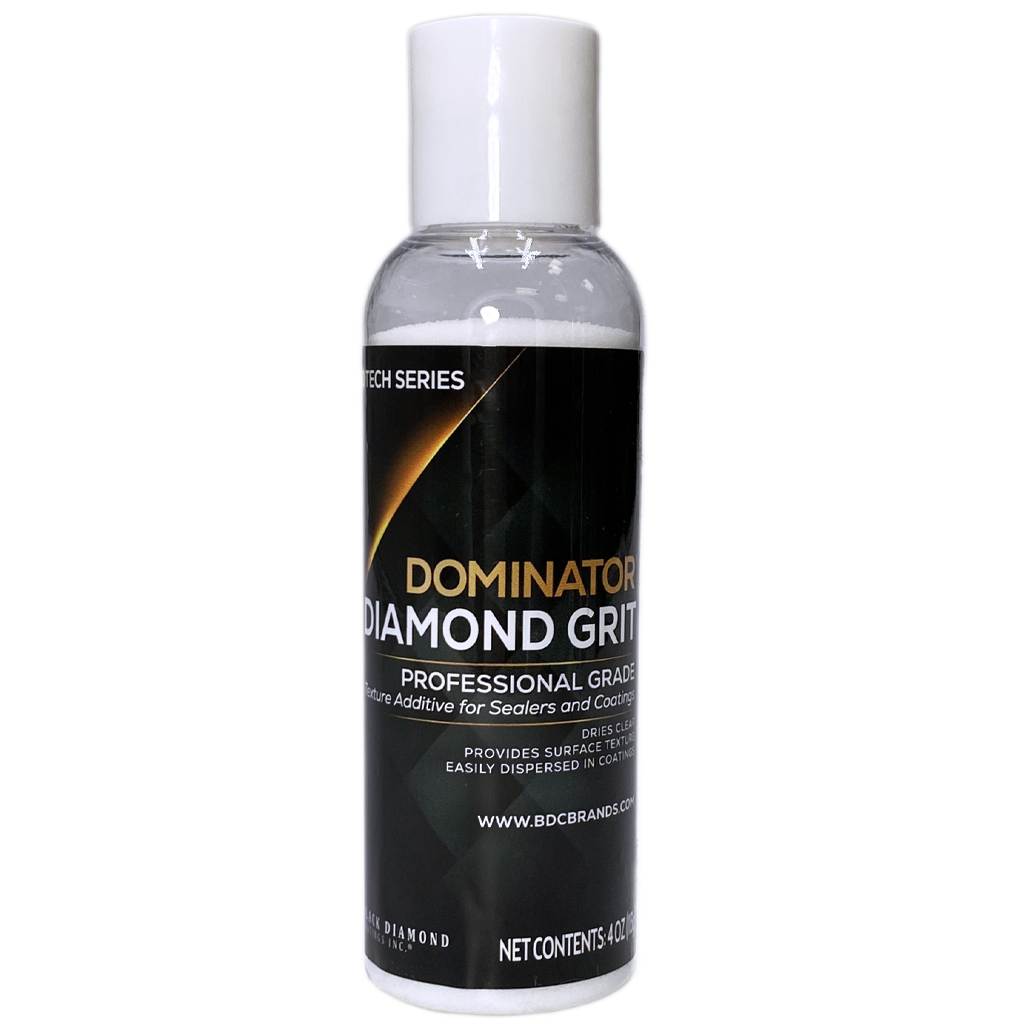
Keep in mind that any coated surface can change traction, especially when wet. Pool decks see plenty of water and bare feet, so they deserve extra attention. For pool decks and other areas with higher slip potential, add a texture additive such as DOMINATOR® DIAMOND GRIT™. Mix it into the sealer or broadcast it into the final coat to add surface texture.
As for High Gloss vs. Low Gloss around the pool, it's all about the look. High Gloss delivers the more dramatic transformation. Low Gloss gives you rich color with less reflected shine.
Driveways
Both High Gloss and Low Gloss can be used on appropriate concrete paver driveways, where proper prep and cure time matter even more.
The formulas are designed to resist stains, rubbing, and rubber transfer, but automotive fluids should still be cleaned up promptly. And remember: wait 48–72 hours before driving on it.
A Bonus Benefit: Joint Sand Stabilization
Both DOMINATOR® Paver Sealer High Gloss and Low Gloss are joint-stabilizing sealers. As the coating is applied across the pavers and joints, it helps stabilize the upper portion of the joint material. That's a big help on patios, walkways, and driveways, where weather, cleaning, and traffic gradually wash out loose sand.
One important note: sealer is not a substitute for properly installed joint material. Joints should be correctly filled, and the installation should be sound before you seal.
Keeping It Beautiful
Maintenance is easy:
- Clean dirt and spills before they build up.
- Remove oil and automotive fluids as soon as possible with a mild cleaning agent.
- Avoid harsh chemicals like paint thinners, aggressive solvents, and stripping chemicals, unless you're intentionally removing the coating.
- Skip the pressure washer for at least 45 days after a fresh application.
After that, treat the sealed surface as the protective finish it is, not as bare concrete.
How Long Does It Last?
We could give you a single number, but it wouldn't be honest. A covered patio that sees light foot traffic and a sunbaked driveway that sees two cars a day live very different lives.
Service life depends on traffic, weather exposure, sunlight, surface preparation, paver porosity, application rate, maintenance, and the condition of the underlying hardscape. The best approach: keep an eye on the coating and reseal based on actual wear and performance, not the calendar.
The Pro's Checklist
Whether you're a homeowner tackling your own patio or a contractor protecting your reputation on a client's driveway, these are the steps that separate a good result from a great one:
- Clean the surface thoroughly.
- Confirm there's no incompatible existing sealer.
- Remove any efflorescence.
- Test a 2 sq. ft. area first.
- Apply between 50°F and 115°F surface temperature.
- Stick to 250–400 sq. ft. per gallon, per coat.
- Never flood-coat.
- Respect the dry and cure times.
Frequently Asked Questions
What's the best wet look paver sealer for concrete pavers?
It depends on the finish you want. DOMINATOR® Paver Sealer High Gloss creates a more reflective wet look, while DOMINATOR® Paver Sealer Low Gloss enhances color with a more subtle sheen. Both are designed for concrete pavers and decorative concrete.
What's the difference between high gloss and low gloss paver sealer?
Appearance. High Gloss produces more visible shine and reflection. Low Gloss creates a softer sheen while still enhancing the color of your pavers. The protection is the same.
Does wet look paver sealer darken pavers?
A color-enhancing wet look sealer typically makes paver colors appear deeper and richer. How much depends on paver color, texture, porosity, and number of coats, which is why a test area is so important.
How many coats should I apply?
Two coats are generally recommended for most concrete paver and decorative concrete applications. Extremely dense surfaces may need only one.
How long should I wait between coats?
About one hour. The first coat should be absorbed before you apply the next.
Can I seal damp pavers?
Yes, if there's no standing water, although a drier surface is preferred for optimal performance.
Can I use DOMINATOR® High Gloss or Low Gloss Paver Sealer on natural stone?
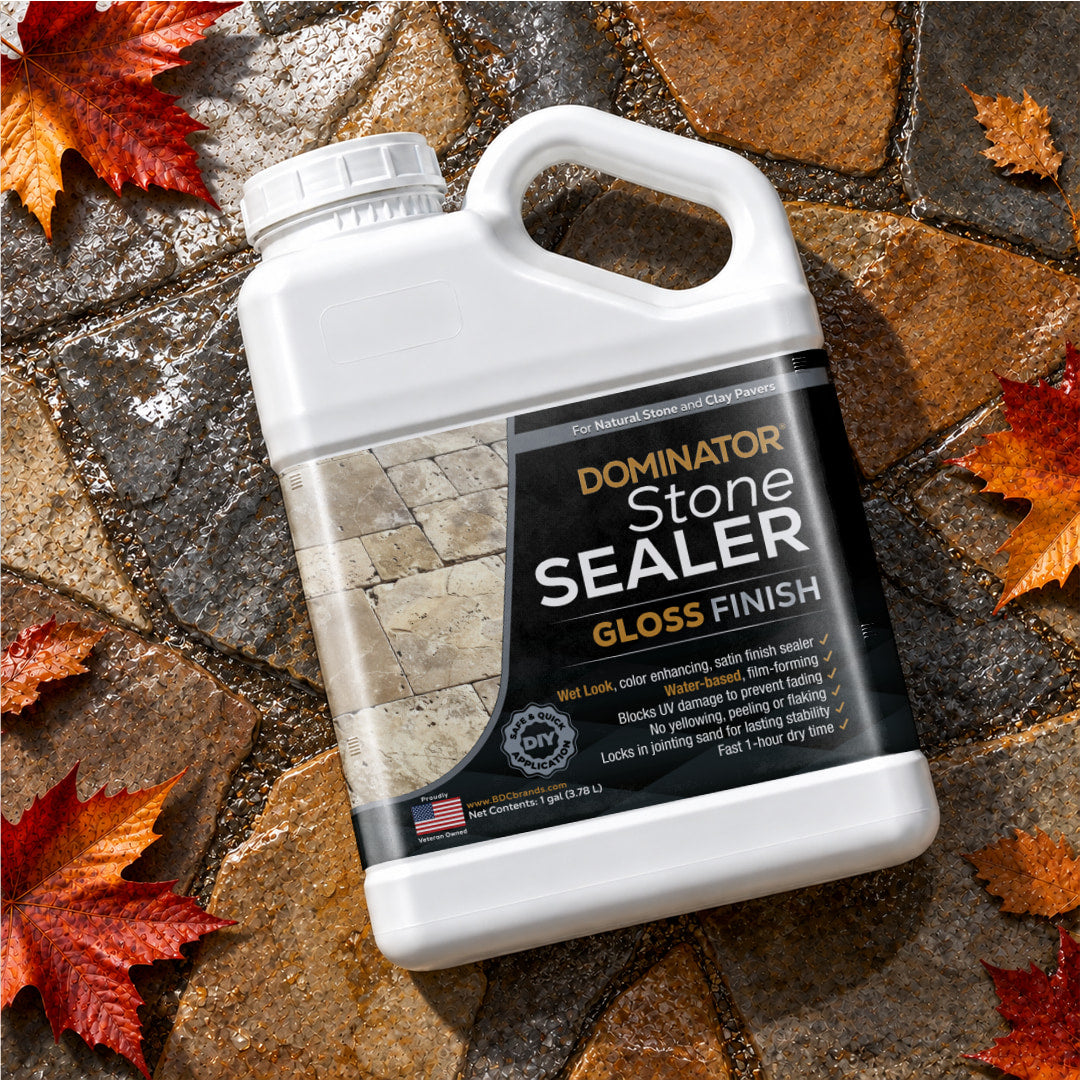
No. High Gloss and Low Gloss are designed for concrete pavers and decorative concrete and are not intended for natural stone or clay brick. Here is the product for those surfaces: DOMINATOR® Stone Sealer
Can I apply new sealer over old sealer?
Not automatically. If an old sealer is present, it may need to be removed first. If you're unsure whether the surface was previously sealed, do the water test.
How much does one gallon cover?
Approximately 250–400 square feet per gallon, per coat, depending on surface porosity and application method.
When can I walk on freshly sealed pavers?
Allow at least 24 hours before significant foot traffic.
When can I drive on a newly sealed paver driveway?
Wait at least 48–72 hours before vehicle traffic.
The Verdict: High Gloss or Low Gloss?
If you want the biggest visual transformation and a glossy, showpiece finish, choose DOMINATOR® Paver Sealer High Gloss.
If you want rich, enhanced color with a refined, understated sheen, choose DOMINATOR® Paver Sealer Low Gloss.
Either way, you're getting the same 2026 polymer-modified, water-based acrylic technology, the same protection, and the same joint-stabilizing performance. Prep it right, apply it right, and the difference between an ordinary hardscape and a professionally finished one will be dramatic.
More shine or less shine, the choice is yours. The protection and color enhancement come standard.